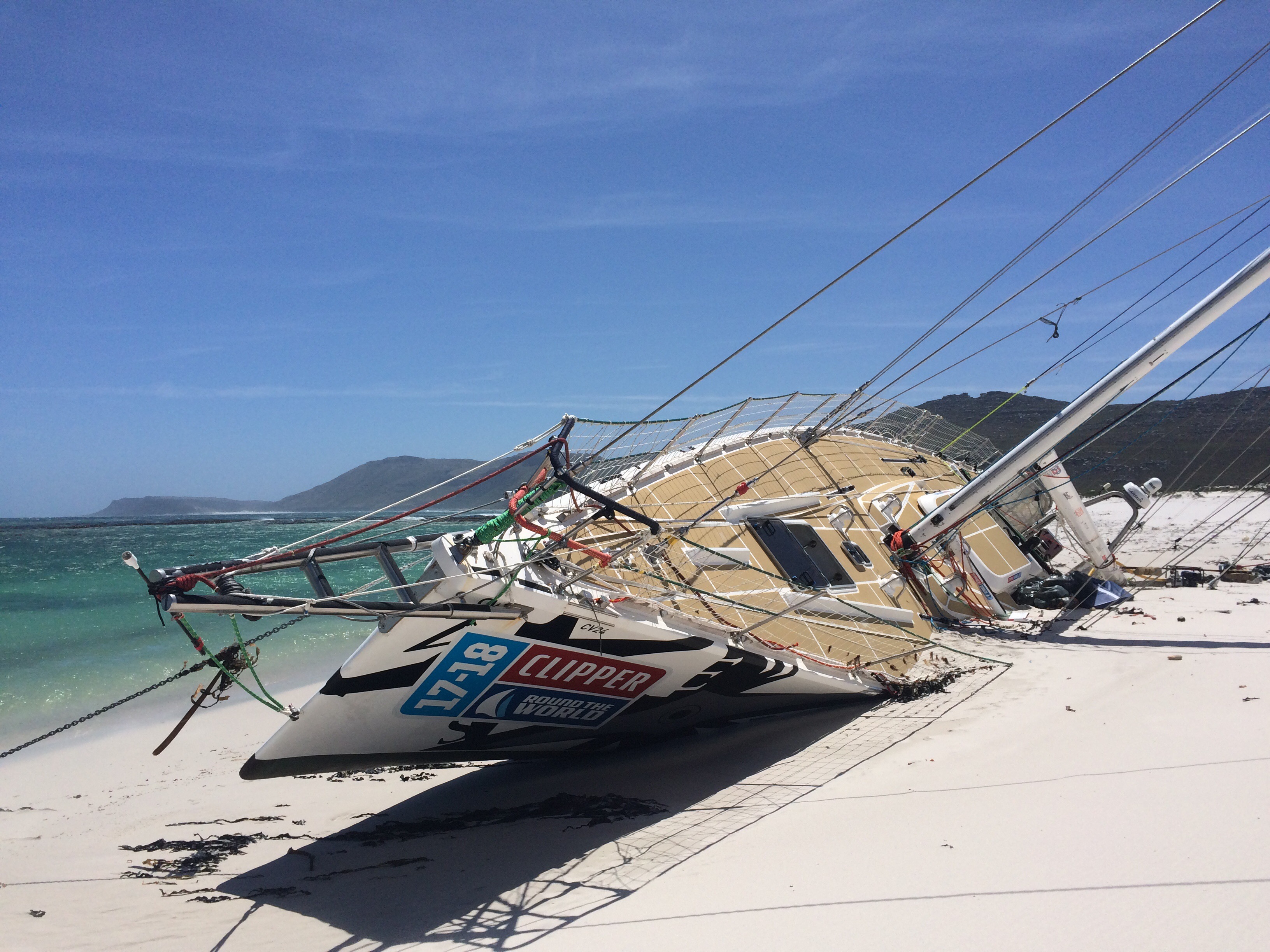
Life’s a beach and then you hit one!!!

I expected challenge and adventure; it was the reason I signed up, but I do think we have had more than our fair share though.

The race start was exciting, as ever, but then we had to fight through some very flukey winds meaning getting out of Table Bay was very difficult. We succeeded and were flying the code2 (Freckles), but were close to the back of the fleet. However, the leaders fell into a wind hole, which we bypassed, enabling us to get towards the front.

We’d settled onto a good course, making around 10 knots when I handed over the helm as we started watches. I was off watch and in my bunk (a lower one for once 😊) when there was a lot of shouting on deck and we were thrown as we gybed. Urgent calls of all hands had us struggling out of our bunks and into life jackets to get up on deck. We then felt/heard the first sickening crunch as the keel hit bottom; I can’t describe how it made me feel. I was only wearing baselayer bottoms, so grabbed a pair of boots and a jacket and went to go on deck after starting the engine.

The on watch were trying to haul down the spinnaker, so we joined in. The main was causing Polly to heel, which was helpful, but we hit the bottom again. We made no progress and it became obvious that we wouldn’t be able to sail off, and the prop at this stage was out of the water a lot, so wasn’t effective. A major issue was the amount of kelp in the water that prevented progress. We were hitting the bottom more frequently and I took the helm so Andy could go below to organise help. The port rudder was hitting the bottom as well as the keel, so I had to be careful of the wheel spinning in my hands.

That was that, the end of our 17/18 campaign. It was then about preparing to leave the boat. The National Sea Rescue Institute were brilliant. Swimmers came on board to help us take to 2 life rafts, and we were pulled off to the inshore rescue boats. They couldn’t get along side as it was too shallow and we had rocks just off the stern. We were taken to Hout Bay lifeboat station about an hour away where we were met by Sir Robin and a Clipper team.

We went out to Polly yesterday, which was a very sad moment, and we did mange to recover a lot of personal belongings; just as well as the storm last night moved and damaged her more. Loads of stuff off to the laundry this today, and I shall have my turn with the Maritime Accident Investigation Board in the morning.

The adventure will continue. . .

Jeremy x
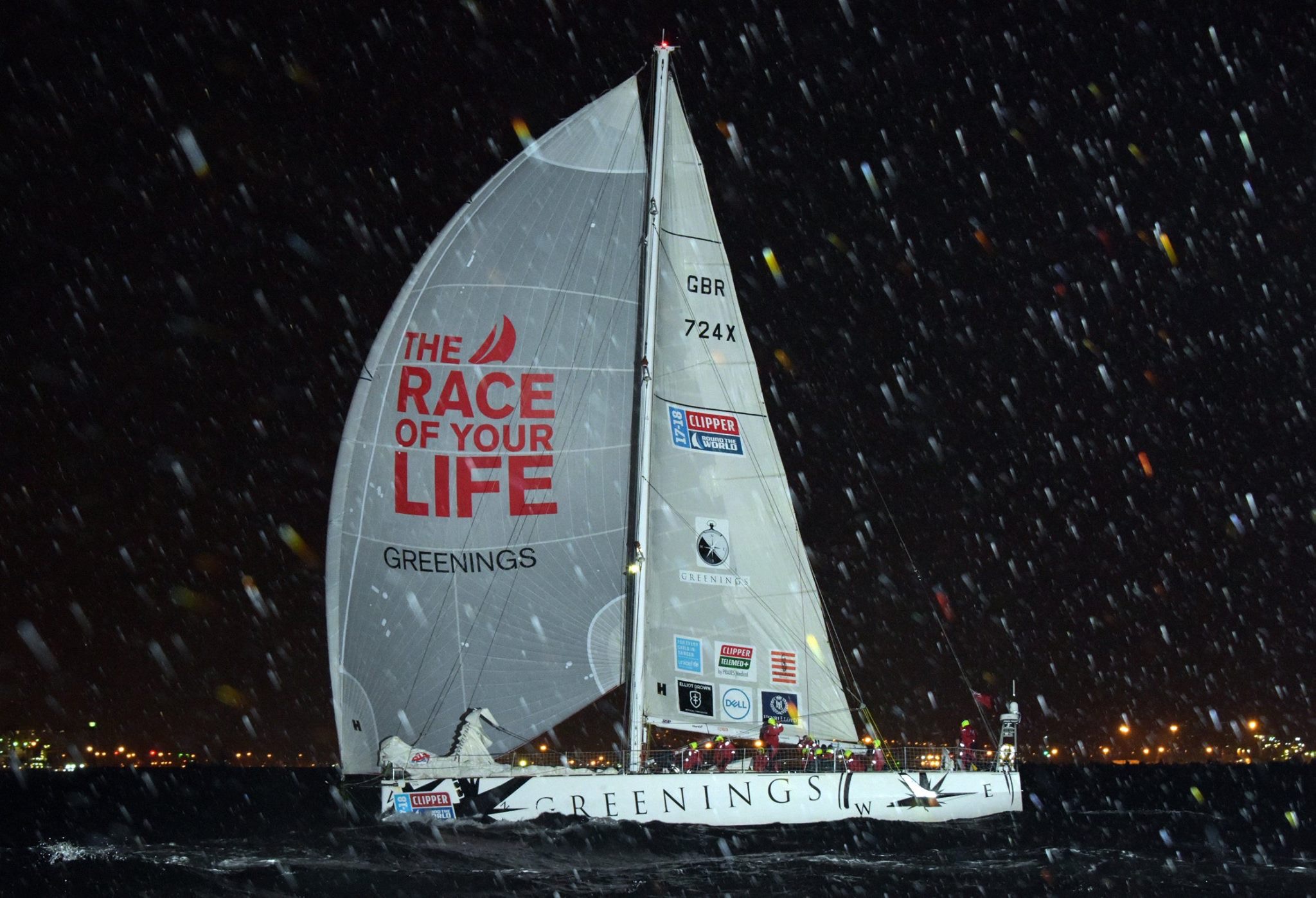
It doesn’t get much closer!

The margin was 17 minutes after racing for 15 days, or around 3 miles having travelled about 3,500 miles. But we won and we’re delighted. Our win in leg 1 wasn’t understood or accepted by many; the vagaries of racing rules and redress, but a head to head race is a different kettle of fish.
One of the many things we learned from Dan was the need to keep sails full and trimmed. Changing a headsail or spinnaker, or taking in/shaking out a reef can reduce your speed by a couple of knots. In fact we did a spinnaker hoist which was immediately tripped and we had to take it down – don’t know why that happened, but that cost us around 5 miles as we had to repair the spinnaker before re-hoisting it. Once more and the result would be different. but that’s the fun of racing as it’s happening to all of us and it’s only when you have someone on your shoulder, only a few miles away, for hours, that you get a sense of the closeness of these yachts. Truly one design, and with equal crews, it’s how you approach the race that makes a difference.

Have you heard of Gough Island? It’s the only piece of land on our great circle route from South America to South Africa. The law of attraction is a powerful law and yes, we found ourselves heading straight for it at one stage. It prompted skipper Andy to pop up on deck and shout “if. You don’t steer 105 degrees now, we’ll hit the %#^?€< island! In the end we skirted round it – just. Look at the race viewer and you’ll see our track. Quite amusing in retrospect.

But what a race! Andy didn’t have a chance to sail with any of us before race start, and we didn’t know him, but in true Greenings style, we just did what was asked. The inshore race was really exciting, followed by some quite heavy winds. The latter part of the race was such a contrast as we found a wind hole so our speed was dictated by the speed of the weather system that filled in the wind. We flew our code 2 and really had to concentrate as we could build apparent wind speeds faster that the true wind, by powering up and catching the odd surf, so could sail faster that the wind! Cool!

It’s Sunday now, two days to race start, and sitting at a beach restaurant amongst Cape Townians enjoying the weekend. As I type, Greenings is sailing past with the new Leg 3 crew on their familiarisation sail :). What a contrast, and not just with living on and racing a yacht. It’s a beautiful part of the world, but such a contrast amongst those who live here.

Landfall is always exciting and I had been looking forward to sailing into Cape Town. Table mountain was quite a sight from 50 miles out, though darkness has fallen by the time we arrived. The biggest surprise I had was having a large grey shark appear alongside Polly and turn away in our wash and swim off. Sailing yesterday on a corporate day with our sponsors meant a day sailing in and around Table Bay which was stunning. Loads of seals mooching around on their backs, flippers in the air and chilling, as well as a whale surfacing and then diving away 50 metres off our beam. We have seen so much amazing wildlife.

Sunshine and a good wind yesterday, and we hope the weather forecast improves for race start in Tuesday when we finally head for the Southern Ocean. There we expect big seas, winds and a lot more surfing. We’ll see . . .

Jeremy xx

Welcome to wind and wet; lots of both!

8th Oct
35-40 knots of wind isn’t the best of conditions for a parade of sail.  Still, the sun was shining and lots of people braved the weather to see us off.  It was too windy to fly all our flags, and we paraded by with 2 reefs in the main and a staysail..You’ve possibly already seen it on Clipper’s web site. We slipped lines one yacht at a time, and each left excitedly with their music playing loudly; our’s is Rocking all over the World. It was time to leave, even though we had been warmly welcomed and hosted in Punta del Este. Lots of steak, red wine (Tannat) and beer; plus the odd song or two!

The inshore race was great fun; twelve 70-foot yachts tacking amongst each other like dinghies in a club regatta – no quarter given or asked for, just racing rules :)) It was rather a baptism of fire for the new Leg 2 joiners as we hadn’t had a chance for a training sail due to the winds.  ’Bob’ had a swim and was successfully recovered between the parade of sail and the start as man overboard training is now routine for each race. Andy, our new skipper, hadn’t been on a Clipper 70 for quite a few months since his last period as a training skipper, but that didn’t really show.  We started down the pack, but were in the lead by the time we left the bay and set course  for Cape Town.

It never ceases to amaze me how changeable the sea can be.  Here in the South Atlantic the waves are long and big, around 3 metres in height. The winds stayed at around 35 knots, gusting 40, but was on the beam so we haven’t been on too great an angle.  A LOT of waves and spray over the boat and physically hard work on the helm. The weather eased enough on day 2 to get Madam Fifi up for a while, but she came down when Andy thought he saw a patch fly off. Something like that could easily end in a massive tear as spinnakers are quite fragile. An hour’s searching didn’t find anything so she was packed for re-use – another hour’s work for two of us.

Today has been a massive contrast; calm seas, a gentle 15 knot wind, sunshine and some time nearly on the level. We came across a number of small whales and had a visit from an energetic school of small dolphins. There are loads of birds around which surprises me as some are quite small and fly a lot as opposed to glide.  We’re hopeful for an albatross sighting soon. Pretty much everybody is now fit and over their seasickness. At one stage we were down 6 people, which kept the watches busy, but now we’re up to a full complement. Just as well as the next weather system is due later today bringing more ind and rain. Over a thousand miles sailed on this leg, and were currently in second place . . .

Jeremy xx

I think it’s sunk in

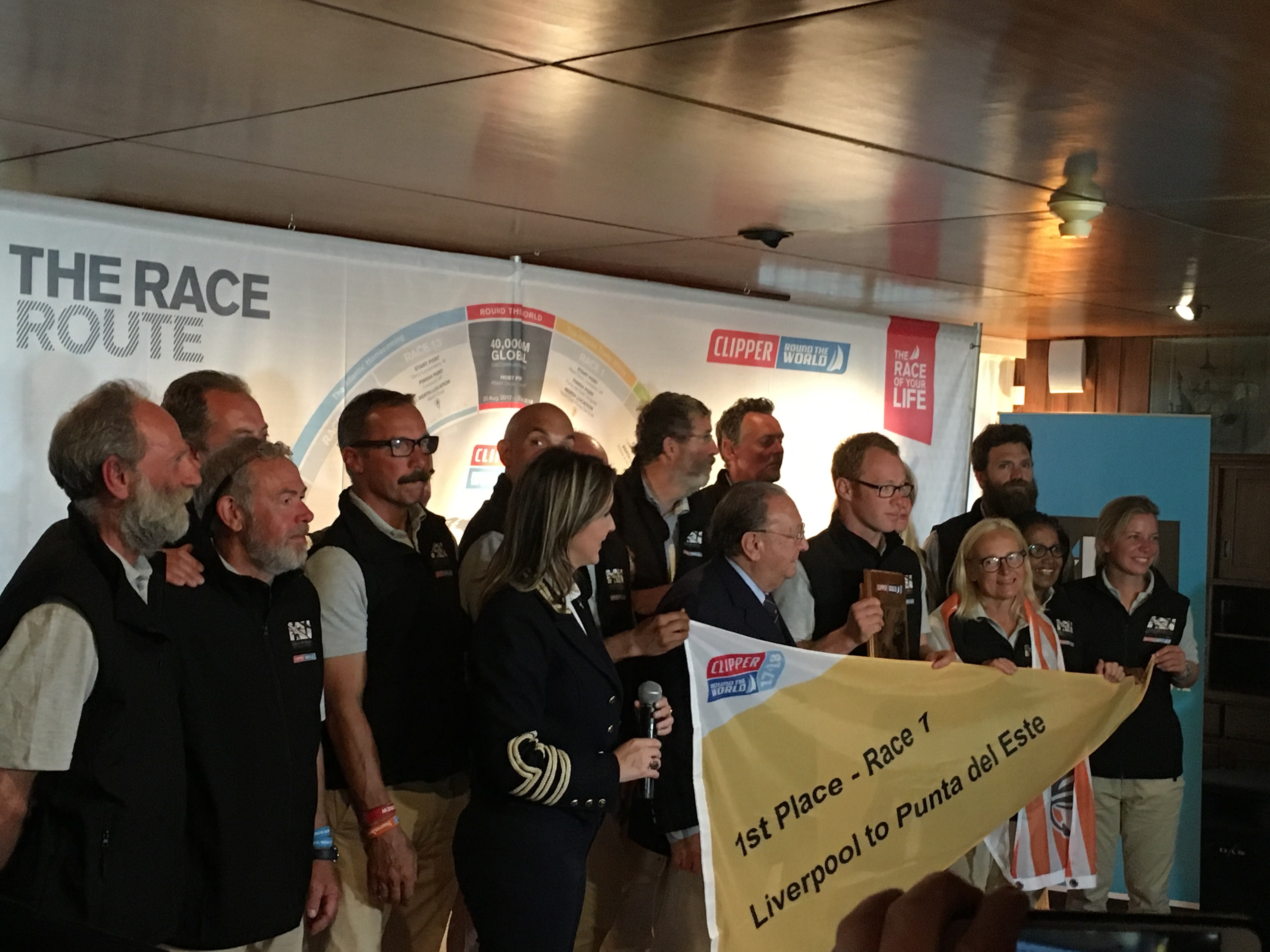
Well we won😄👏. Not just the first race, but also the first ocean sprint and the Stormhoek Social Spirit award! Wow. Crossing the finishing line was fantastic, and we had a wonderful reception in Punta del Este; I guess being 4.30 on a sunny Saturday afternoon helped. took a long time to sink in, though. Probably not until the awards evening really. I think that’s because we were a couple of days behind the fleet and, therefore, had spent most of the race by ourselves. However, that’s typical for long distance ocean racing and, as this is my first long distance race, I’m sure I’ll get used to it. Roll on the next race; we can’t wait to show the fleet a proper clean pair of heels. The challenge is to not put too much pressure on ourselves and just do the best we can.e last week has flown by. We had to spend a long day deep cleaning Polly, and return her to an acceptable condition. It’s something we will try to stay on top of in the future. Then a number of repairs and some routine maintenance. I had to rebuild the two masthead spinnaker blocks as the plastic bearings had completely collapsed – soooo much nicer to do it in port on a sunny day with a gentle breeze. Last time when I had to go up to retrieve a spinnaker halyard just north of the doldrums, I was whipped around quite a lot, even though we were on a fairly stable spinnaker run. I used a carabiner to clip to the shrouds to minimise movement, but I think it might have made it worse. Still, the bruises have finally faded 😏. I can’t believe how much weight I lost; probably 7 or 8 kg! A good reason to eat lots of steak though- accompanied by some great red wine. Tannat is a variety I haven’t come across before, and it’s really nice; originally from the Madiran AOC in south-west France.
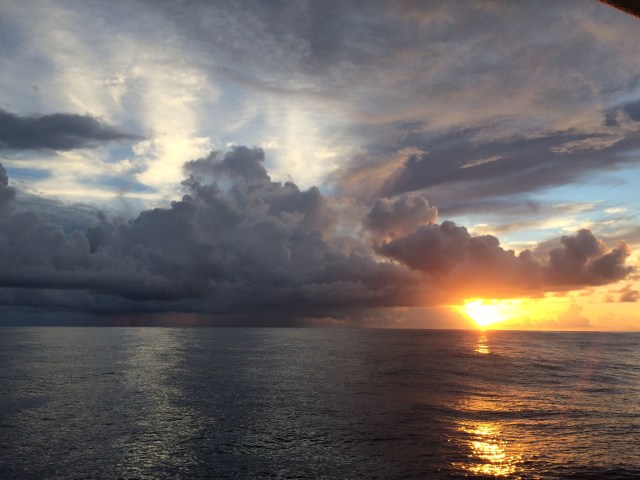
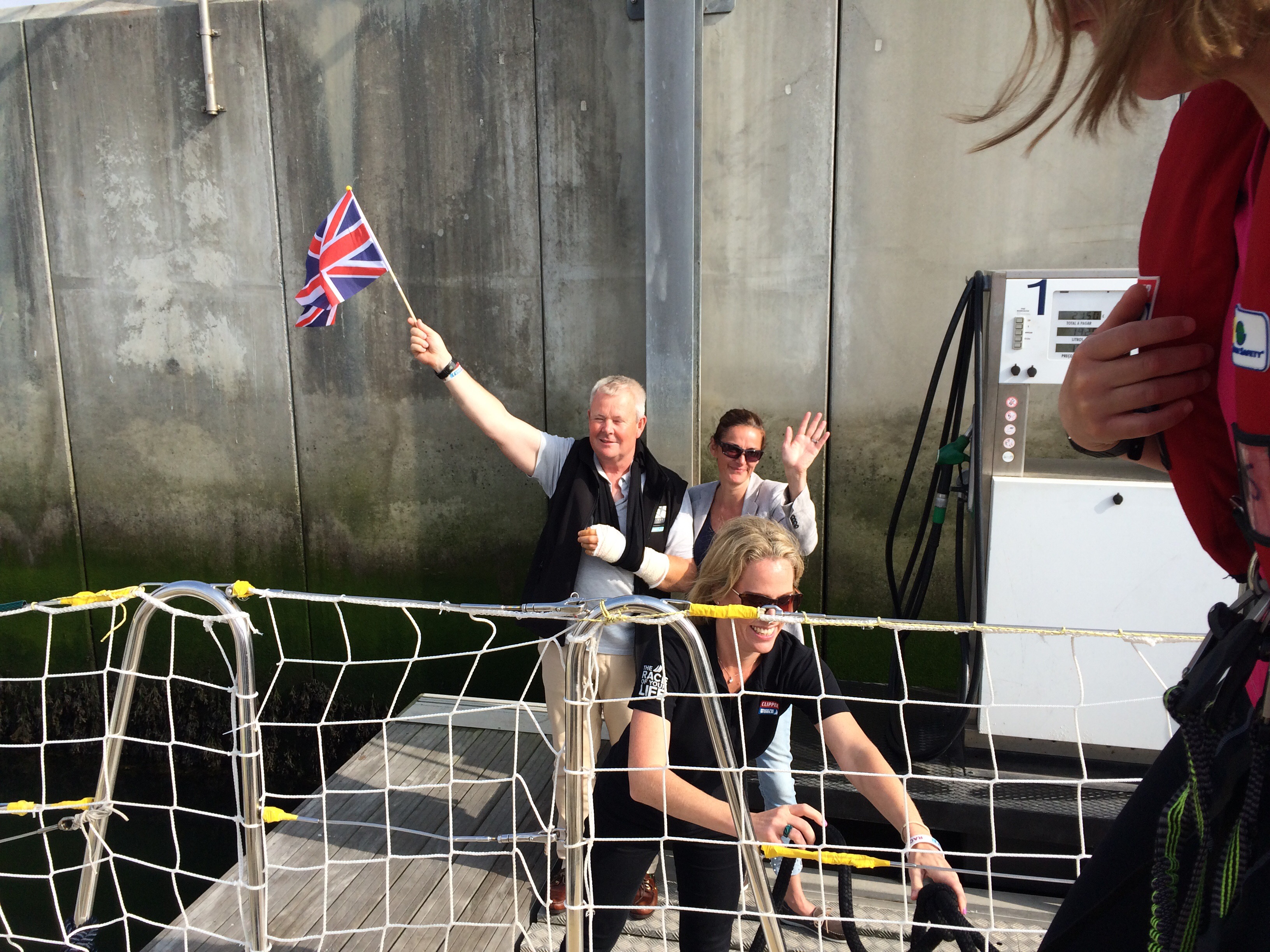
What a start though. David’s injury could have been so much worse, but he’s healing well and we’ll have him back in Fremantle. He’s coming out to Cape Town with Andrew Greening, so we’ll catch up whilst doing some corporate events for Greenings. We’ve had so many magical moments though; almost too many to recount. Swimming in the doldrums was awesome; incredible cloud formations, sunrises and sunsets; sooo many stars out at night and new constellations; the incredible wildlife, particularly the dolphins who come and play with so much energy; steering a racing yacht at night, making around 17 knots under spinnaker (Don hit 21 knots 😏). All that fun and have I mentioned that we won? (You’ll have to forgive me for going on about it, but we’re really quite chuffed.)

We met our new step-skipper yesterday, Andy Woodruff, and we will be going out on the water with him tomorrow so he can have a look at us, and so that the 8 new Leg 2 guys and girls can get their feet wet. With 35 knots of wind forecast, it could be bit of a baptism 😳. We also have a replacement Code 3 spinnaker (The Prodigal Son), but it’s not new. It’s already been around the world in the 13/14 race so, having had some ‘strengthening’ by Jenny and her sail repair team, we’ll be able to see how it copes. Andy seems great, and is competitive with a great sense of humour; all bodes well.

Jeremyx

How many more tacks? (23rd Sept)

About 18 miles to go and we’re still having to work hard. The wind is on the nose so we are beating towards the finish line and, with the redress time for our unscheduled stop in Porto, we are likely to win the race.
The last few days have been a blur; watches melding into a stream of living on the 45 again. Talking with Dan, it is likely that the night we held onto Mademoiselle Fifi long into the night on a rising wind, with no code 3 spinnaker to cope with the strong winds, we gained the winning edge that we have fought to keep. Other yachts may have not done so, as many of us have had to make major repairs to spinnakers. We know this as Don runs the numbers 4 times a day to assess our gains and losses.
We have had a number of hoists and drops since then, all to keep speed up. What has become clear is that maintaining speed through sail changes, sharp quick tacks, straight line accurate helming and keeping weight on the high side pays off in spades. It is easy to lose half a knot here and there, easily adding up to a few miles a day. Even just losing 2 miles a day over 34 days can mean coming in the latter part of the fleet. 68 miles might be less than the gap between first and second but, at one stage, 6 boats were within 45 miles of each other.
It’ll take a day or two to reflect, and realise we have won the first race; quite significant considering the adventures we Seadragons have had. Standing on the podium is still an incredible thought, one only dreamt of 5 weeks ago.

Put the kettle on (12 Sept – Equator crossing)

The kettle goes on a lot on Polly. That relaxing moment, a short reflection whilst the kettle quickly boils, then sit and enjoy 😊

At least, that’s how it should be. The kettle is shaped like a ship’s decanter with a very wide bottom. Stable, but takes an age to boil on the gimballed hob. You may have poured from a ship’s decanter- the first bit is fine, but then you have to tip the decanter almost upside-down to get more out. Being down below plays trick on you senses. When you put something, you expect it to go straight down, vertically. It does go straight down, but that could be at a 45 degree angle, either towards or away from you. So you hold the cup, find the right angle of down and pour hot water into it. Fine, but then you have to put the cup down. Anything over half full comes out again . . .

Usually you are making 8-10 cups of tea or coffee (generally freshly-brewed coffee 😄 though some heathens on board drink instant), so we have a plastic container to corral the cups and catch spillages – lots of those. It’s possibly 30 minutes since the kettle was put on. The next step is to get the hot drinks to their destination up top. Two feet to the companion way, and 6 steps up the ladder; simple you might say. Well, this is where the fun really starts. Holding on to handles or straps with one hand, applying elbows, bum, knees, hips, ribs, or whatever to any other protrusion, you tentatively move towards the steps, like approaching an ambush. In between the non-slip floor strips, the floor is lethal and one miss-step can cover 8 feet at speed down hill, ending ignominiously in a wet locker. Don’t want that, as it means restarting from scratch and another hour.inch by careful inch you make your way to the ladder. Step by careful step you pull yourself up to the top knowing this is the first of 2 or 3 trips to supply the guys on deck. These half-full cups of cooling tea/chocolate/coffee are collected for the next stage of their perilous journey, either to the high side, only a few feet away, or 20 feet to the helming station. Bear in mind that you are sitting on a bucking bronco whilst doing this.ps arrive now one third, or a quarter full of tepid, but welcome drink. The anticipation. . . the lift it will bring . . . then the skipper, full cup of tea in hand, pops up in the companion way: “ready to tack . . .”

Hot, damned hot (Thurs 7th Sept)

Sailing through the night in a t-shirt and shorts is a real treat for a UK-based sailor. Warm winds in the middle of an ocean doesn’t seem possible. However, to be that warm at night comes from blistering heat during the day (46 C today) which, with high humidity, means you are dripping even when you only think about moving. At work top sides is ok with a breeze, but when you come below (a mere 32 C) . . . Not surprisingly we study the pee colour chart to check for dehydration.

We always needed to look out for squalls

We have quite a few fans around below, and many have personal fans to help them sleep. However, we have yet to get to the doldrums and have a lack of wind to cope with. I wonder how fractious things will become? So far we are a united team, operating in two watches with no animosity between us. Heat leads to an additional lack of sleep, so we have swapped our watch system around with the longer watches now at night so we can sleep for around 5 hours in the cooler nights.

Friends drop by (Tues 5th Sept)

It’s very difficult to describe the beauty around us. The variety and colour range of sunsets is breathtaking at one end of the day, and sunrise suddenly seems to be with you to welcome the new day, doesn’t matter what day it is any more. Yesterday the sea was an incredibly clear aquamarine blue.
We are sailing quite fast which has a different effect on the locals. We have dolphins almost on a daily basis and yesterday a pod out hunting saw us and, all together, turned to come and play. Their grace and beauty at speed is breathtaking. When they jump out of the water, it’s as though they are competing to see who can fly the farthest. They cris-cross each other and us , using our bow wave and other waves to help them to accelerate. Flying fish are probably trying to avoid them, and also might see us as a massive predator as we often set them in flight. Initially it would make you jump when hit in the back by one. Now we just quickly throw them back in their way. Some of the other boats are catching them and want to eat them. We have had an aerial companion for the last two days who is happily wheeling around us and harvesting the flying fish as we set them flying.
We’ve had the occasional whale sighting, generally just when they blow, but Toni identified an orca yesterday, though I only saw it’s fin, and two sea turtles wallowed by on a course to wherever. Small land-based birds have stopped and rested for a while and other seabirds skim the waves endlessly seeking food.
P.S.
21st Sept. we are very near the Uruguayan coast with lots of fluorescence in the water, and making 11 knots on a fine reach. I suddenly notice a number of strange streaks in the water, amongst the whitecaps. 5 dolphins have dashed over to play, racing alongside us and competing amongst themselves to lead. They stayed for about 5 minutes, dropping of one by one until just one remained to claim victory over it’s peers.

Is there a typical day? (Sun 3rd Sept)

There can’t be that much to do, surely? Well, it depends. Bay Watch was called up early at 5 because a small hole seen in our code 2 spinnaker had begun to grow and we needed to repair it straight away. It’s amazing how quickly a small hole can grow into a tear across a panel, and then the whole seam goes. So, how did you get a small tear? It started yesterday when we saw a 20m length of 120mm marine fuel hose too late to avoid it and caught it around our keel and one rudder. Some amazing work by skipper Dan and Matthias enabled us to get hold of it, but then we wrapped the kite!
A large asymmetrical spinnaker is a sight to behold; beautiful when flying, and we now only have 2. They’re critical when racing with the wind to our side or behind us as it is in this leg. A wrap is when the kite collapses and falls against one or both of the forestays and wraps round it. We have a net that generally stops this, but in this occasion, that was fully involved in the wrap as well. Part of the spinnaker folds around the forestay forming an hourglass, then continues to roll around it into a tight bundle. This bundle is usually very difficult to pull down and doing so can lead to greater damage. Three hours later, the pipe is extracted and photographed and left to be rediscovered; unfortunately, too big for us to take. The spinnaker was unwrapped, then taken below to be wooled and re-flown. All told, we probably lost 10 miles due to our reduced speed. Wooled? Well, these sails are very big and, to avoid the wind filling them as we hoist them, we roll the sides in towards each other, a bit like the Mercedes three-pointed star, and tie them up with wool. Once hoisted, we pull the bottom apart, the wools snap, and the kite fills with air and we romp off😊 All this takes place down below along the companionways- a challenge as the sail is longer than the available space.
So when we saw the small hole, Dan decided it should come down to be repaired and we’d hoist the larger code 1 spinnaker. All went well and the team began patching down below. Dan decided we should gybe (change direction in such a way that the wind goes round behind us). We had minimum numbers on deck, and all seemed to go well until this spinnaker wrapped on its way round. On this occasion, though, we weren’t as fortunate, and ended up with a 3m tear across the bottom; both spinnakers now out of action! Large Yankee foresail then hoisted to keep speed up. The code 2 was soon back up, and the repairs on the code 1 undertaken. Another small hole was soon discovered, but on this occasion, the kite was taken down, Yankee up, kite repaired, re-wooled and flying again within an hour – a fantastic achievement, especially in the equatorial heat down below.
The next question was what might be causing the holes? Much of the work we do is preventative, so this was important. We believed it was from the wrap, but someone was put up the mast to check for anything that might be guilty; not me up the mast on this occasion.
Aside from all this we have our watch routine, keeping Polly sailing as fast as we can, in the right direction, cleaning heads (toilets) on each watch, together with emptying the bilges and grey tanks, making water, and mother watch feeding us. Oh, and getting a few hours of sleep in your off watch provided you’re not called on deck to drop a kite with a hole in it.

Reset

We’ve had a good stop in Porto😊. Dave is here and in good heart, together with Dan and Sarah from Clipper. In the end, only two are not continuing, and we’re excited about learning what we can from Dan to be in a good position when Dave returns.

Thanks for your support, it’s very much appreciated. I’ve a few jobs to do (guess it’s up the mast again😏) and we’re off as near to 5 as we can. The race continues . . .